Improved cellular health promotes Neuroplasticity and Mental Health
Neuroplasticity is our brain's ability to change, reorganize and rewire itself over the course of our lifetime – not just in childhood. Instead of being fixed (as was once believed) our brains are constantly changing. This makes Neuroplasticity among the greatest gifts nature has given us!
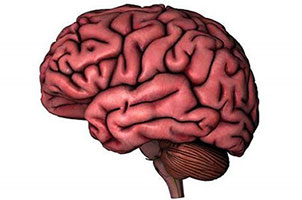
But there’s also a potential downside because far too few people know what Neuroplasticity is, let alone how to use the gift to their own full advantage. Worse (still) in the absence of this realization and knowledge of the inherent power of Neuroplasticity, many people inadvertently harm and disadvantage themselves without even knowing they are doing it!
For this reason, a core objective of Replenishing Care is to make Neuroplasticity a conversation at family dinner tables, part of school curriculums and a recognized component of primary and public care systems. The potential wellness, productivity and peace of mind benefits of doing so are exponential and generational with the cost of doing so pennies on the dollar compared to traditional mental health methods.
Neuroplasticity 101
We must all (at least) be conscious of our own Neuroplasticity as well as our children’s, and (ideally) intentionally and purposefully help shape where it takes us and them. Here are critical brain traits and behaviors to keep in mind:
- Our brains will become what we teach it to be through our thoughts, feelings and actions.
- Because our brains strive to be efficient, the things we think, feel and do most often will become what our brains do most efficiently. (A personal example of that for me was my Autobahn-like alcohol pathway that I never thought I would be able to exit - but did using Neuroplasticity).
- Our brains have no opinion and do not differentiate between what is good or bad for us. Instead our brains simply adapt to learn/perform new skills, meet new people, experience new things (while again seeking to become efficient at what it repeatedly sees, hears, feels and does most).
- Our brain is super powerful and can/will (physically) reorganize its structure, functions, and connections in response to experience, learning, or injury.
- What is most exciting is that we have the power to direct our brain’s growth and development so that it re-structures itself to align with our goals and wellbeing. A good example of applying Neuroplasticity is intentionally choosing new tasks, new experiences, and (if/as needed) new ways of thinking about ourselves, our capabilities and who we actually are - that alert and stimulate our brain that something different is unfolding.
- This, how we see and talk to ourselves aspect is vital because the other side of the Neuroplasticity equation is, that because our brains do not distinguish between good or bad -negative thoughts, habits, stress, and behaviors can just as easily be hardwired through repetition.
- Among the most impactful Neuroplasticity influencers are (the estimated) 1000 self-talk messages we tell ourselves each day.
- Specifically, repeatedly condemning ourselves with self messages like: we are no good, nothing ever works out for us, or our dream is impossible (et cetera) - will (literally) not only cause our brains to believe these things but will actually cause our brains to create neural pathways in order to become efficient in bringing these thoughts and messages to reality.
- This negative messaging is a blueprint for many people going through their lives never knowing the joy and fulfillment they should or (perhaps) even knowing who they truly are or were created to be.
The power of belief in Neuroplasticity
Simply defined, a belief is acceptance that a statement is true, or something exists. A wonderful Hollywood example of the power of belief is demonstrated in the movie, The Matrix, in which Neo, the hero, has been programmed to use martial arts like a master,- but cannot be victorious until he truly believes he can win - after which he is untouchable by enemies who previously overwhelmed him.
The role of belief Neuroplasticity is invaluable as follows:

- A core principle of neuroplasticity is that neurons that frequently communicate strengthen their connection, making the behavior, thought, or emotion more automatic (often expressed as: What Fires Together, Wires Together): Our beliefs act as a guide for what to strengthen thereby reinforcing patterns through repeated thought.
- Psychological Studies Research by Stanford University suggest:
- that believing your abilities and intelligence can be developed (a growth mindset) triggers the brain to form new neural pathways, particularly when facing challenges.
- Conversely, a fixed mindset (I can't change) can create a self-fulfilling prophecy of limitation.
- Self-Directed Neuroplasticity builds on a growth mindset by intentionally directing our brain's restructuring through focus on positive thoughts, expressing gratitude, or learning new interesting and challenging skills.
- These deliberate changes direct our brains away from old, negative, or addictive habits and behaviours and prevent/mitigate the dark side of Neuroplasticity.
- Deeply held beliefs, especially when combined with emotional investment, accelerate the rewiring process. Mental rehearsal or visualization of a desired outcome (e.g., imagining performing a task perfectly) can trigger the same neural pathways as the actual physical action, strengthening them for real-world performance.
- Neuroplasticity has great application to healing and adaptation allowing our brain to recover from injuries like strokes or brain damage by training healthy areas to take over functions previously managed by damaged cells.
Among the recognized methods to encourage belief include:
- Mindfulness: using regular meditation to increase gray matter density in regions associated with learning, memory, and emotional regulation.
- Affirmations: the repletion of specific, positive, and realistic statements (e.g. I can learn this!) help overwrite negative self-talk by creating new, reinforcing neural pathways.
- Embracing yet: simply changing the phrase: I can't do this to I can't do this yet - fosters a growth-oriented and more resilient brain.
- Sustained effort and repetition: Neuroplasticity is not a quick fix and requires consistent practice, attention, and time to build lasting changes.
Replenishing Care approach to Neuroplasticity
The Replenishing Care Model's Tools and Technologies include training in Neuroplasticity. RC also utilizes High Powered Pulsed Electromagnetic Field (PEMF) therapy which significantly uses and enhances our innate power of belief.

Replenishing Care is a division of Replenishing Care and Technologies